
Have you ever wondered, like me, if one or two spaces should come after a period in a sentence? Well, we are not alone. Apparently there is a dichotomy of opinion on this issue.
“Typing two spaces after a period is totally, completely, utterly, and inarguably wrong.”
Strongly held views are asserted by each camp. For the one-spacers, Farhad Manjoo puts it best:
Well, alright then.
Not long ago, mere hundreds of years back, inconsistency reigned regarding spelling, punctuation and print design.
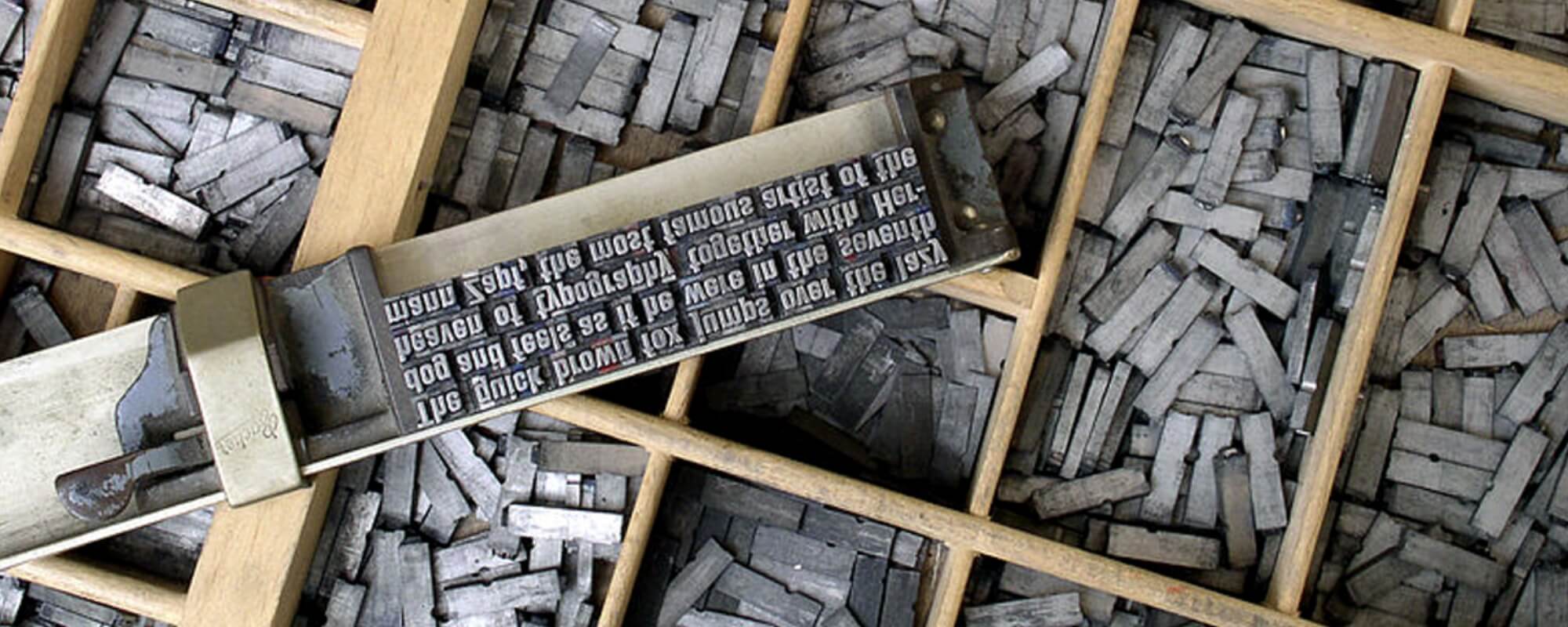
In the early 20th century typesetting eventually became more widespread. Typesetters began to settle on a single space after the “full stop.” Europe was first to adopt this and America followed soon after. Then came a now virtually extinct technology — the manual typewriter.
The first typewriters had mono-space type. The introduction of the two-space rule was to accommodate the aesthetic shortcomings of the mono-space typewriter.
Things had hardly settled down when the 1970’s advent of modern proportional fonts turned it all upside down again. As the need for the extra space fell away the single-space-after-a-period made a comeback. Ask any modern typesetter today. The consensus is universal, one space rules.
Another one that gives rise to confusion is the rule of the period and the quotation mark. This rule applies equally to the other punctuation marks, like comma, exclamation and question mark, when used with quotation marks.
Depending on whether you are following British or American convention there are two ways of doing this. British style dictates that only punctuation marks that are part of the quotation should be included inside the quotation marks.
Does she look like a “Jane”?
He said: “What are we going to do next?”
The dog is named “Fido”.
Americans do it differently. The punctuation mark always falls inside the quotation mark:
Does she look like a “Jane?”
He said: “What are we going to do next?”
The dog is named “Fido.”
As is often the case with American language rules, there’s an exception. When the quotation involves a single letter the punctuation mark falls outside the quotation mark:
The three doors were marked “A”, “B”, and “C”.
If that’s not confusing enough for you there is a rider to this rule. It concerns the introduction of an apostrophe to the mix. Here the punctuation comes after the apostrophe, but inside the quotation mark:
“We went to the concert with the Davids’.”
As far as I can tell this applies for both British and American usages. To see just how confused some people are about “quotation” marks, check out this fun link: the “blog” of “unneccessary” quotation marks. You won’t feel so bad next time you make a mistake that involves a quotation mark.