
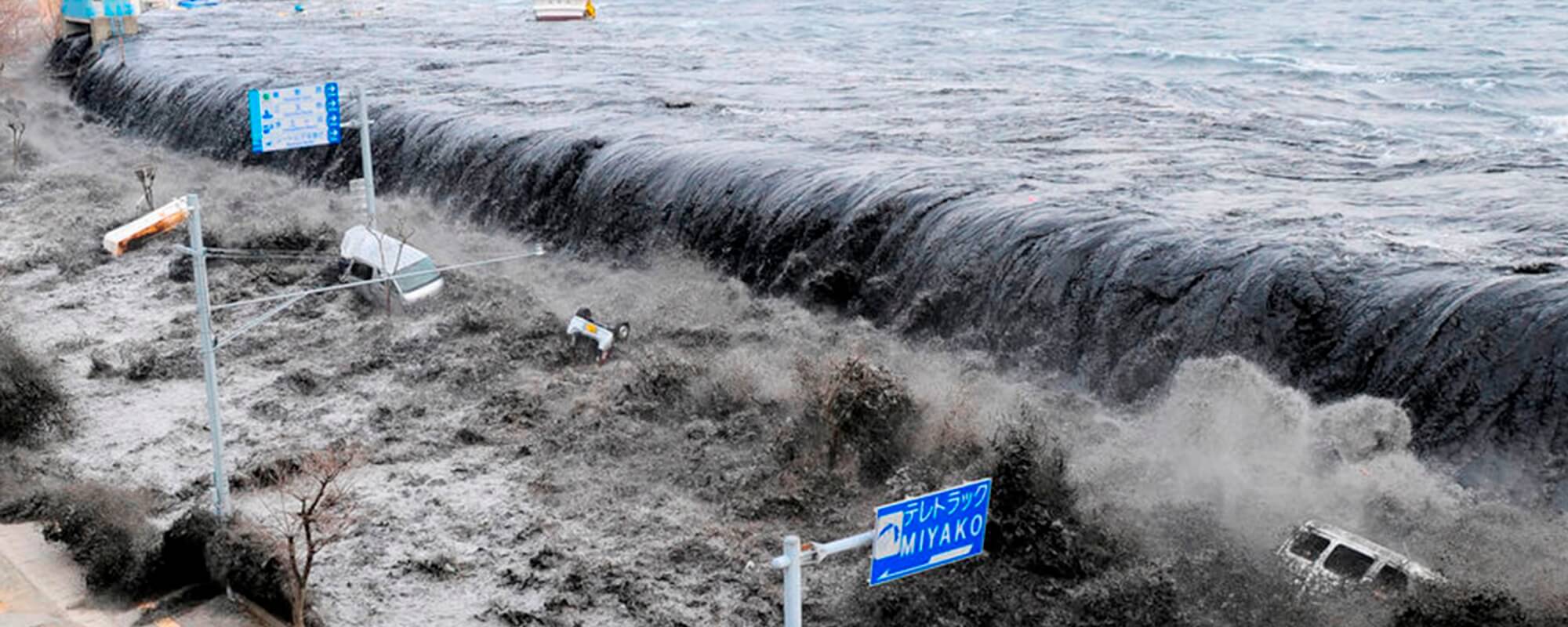
Utter devastation and mounting problems faced the deeply shocked survivors of the worst Japanese seismic event in history. The Japanese people, in the first moments realised that something was different from the intensity and duration of the movement of the ground.
The one-meter drop in sea level which occurred immediately after the 8.9 level earthquake confirmed that this was a seismic event big enough to generate a deadly tsunami. People on the coast began evacuating immediately.

The tsunami arrived on the shore at Sendai a mere 10 minutes after the quake, and 30 minutes after the quake at the shorelines of the Iwate and Miyagi prefectures. The wave was shockingly huge, reports vary between 10 and 15 meters. The series of tsunamis (tsunamis come in sets) penetrated 10 kilometers (6 miles) inland, further than expected.
In the Land of the Rising Sun the troubles were not over. At Fukushima Daiichi plant all six of the plants reactors experienced problems following the earthquake and tsunami caused a deadly radioactive nuclear cloud to spread. Emergency Services urged people living outside the 20km (12 mile) evacuation zone to stay indoors.
According to a report from The Guardian:
Japan’s nuclear safety agency required Fukushima plant workers to evacuate the site due to high radiation levels, but the government later upped the legal radiation exposure level, allowing work to continue inside the plant
The government’s chief spokesman, Yukio Edano, said Japan was considering seeking help from the US military. The balancing act facing the brave engineers at Fukushima Daiichi was to cool the radioactive material with seawater without allowing hydrogen to build up.
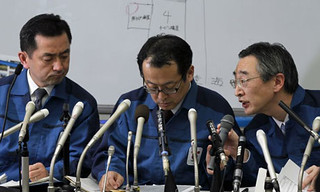
Excess hydrogen had already led to several damaging explosions at the plant. Their efforts were to prevent a contamination disaster of huge proportions.
At Chernobyl in the Ukraine in 1986, inadequate measures were taken by the Soviet authorities to control milk and livestock contamination from radiation emitted during the explosion of the reactor. Figures are hard to come by and estimates of the total number of deaths attributable to the accident vary enormously, from possibly 4,000 to close to a million. Containment issues and problems at the destroyed plant are an ongoing saga. Russia, Ukraine, and Belarus have been burdened with continuing and substantial decontamination and health care costs due to the Chernobyl accident.
France’s foreign minister Alain Juppe said that 9,000 French citizens in Japan had been asked to move to the south of the country. India ordered all food imports from Japan be tested for radioactivity.
As the crisis unfolded in Fukushima, anxiety levels in Tokyo, 150 miles to the south, continued to rise. Radiation levels in the capital were soon 10 times higher than normal.

re·sil·ience ~noun
- the power or ability to return to the original form, position, etc., after being bent, compressed, or stretched; elasticity.
- ability to recover readily from illness, depression, adversity, or the like; buoyancy.
Facing this apocalyptic end-of-days type scenario was the resilience of the Japanese people. Within hours of the tsunami some Japanese citizens turned up for work “because it’s a work-day.” In the streets of Tokyo, pedestrians waited patiently for the “green man” before crossing a street that was devoid of cars. There were no scenes of looting and theft, such as those that happened in the aftermath of other catastrophes in Chile, Haiti, New Orléans, and in the UK.
In Japan when a young child finds a small coin, perhaps equal to our one cent, the parent will go with the child to the police station, or koban, where a police officer who does not consider it to be a waste of time, will laboriously fill out the required missing property forms and then studiously tell the child that, if it is not claimed after a period, the property will revert to the finder. In this way a deep respect for the sanctity of private property is instilled from an early age.
The legendary technical expertise and capacity for organization of the Japanese people has served them well for generations. They have earned a deserved and longstanding respect from the international community as well as a willingness of assistance from all quarters of the world: shortly after this disaster, entering the search term “donation for japan” on Google yielded a staggering 9.25 Million results.
Japanese people bring integrity, dedication, hard work and honesty to the table when confronted with wastelands of debris, and soon they were off to a good start with their recovery efforts.